
Face the darkness within
Creatures and Enemies
Discover Zyltharn's diverse enemies and the mystical creatures that roam its lands.
The Saints
-
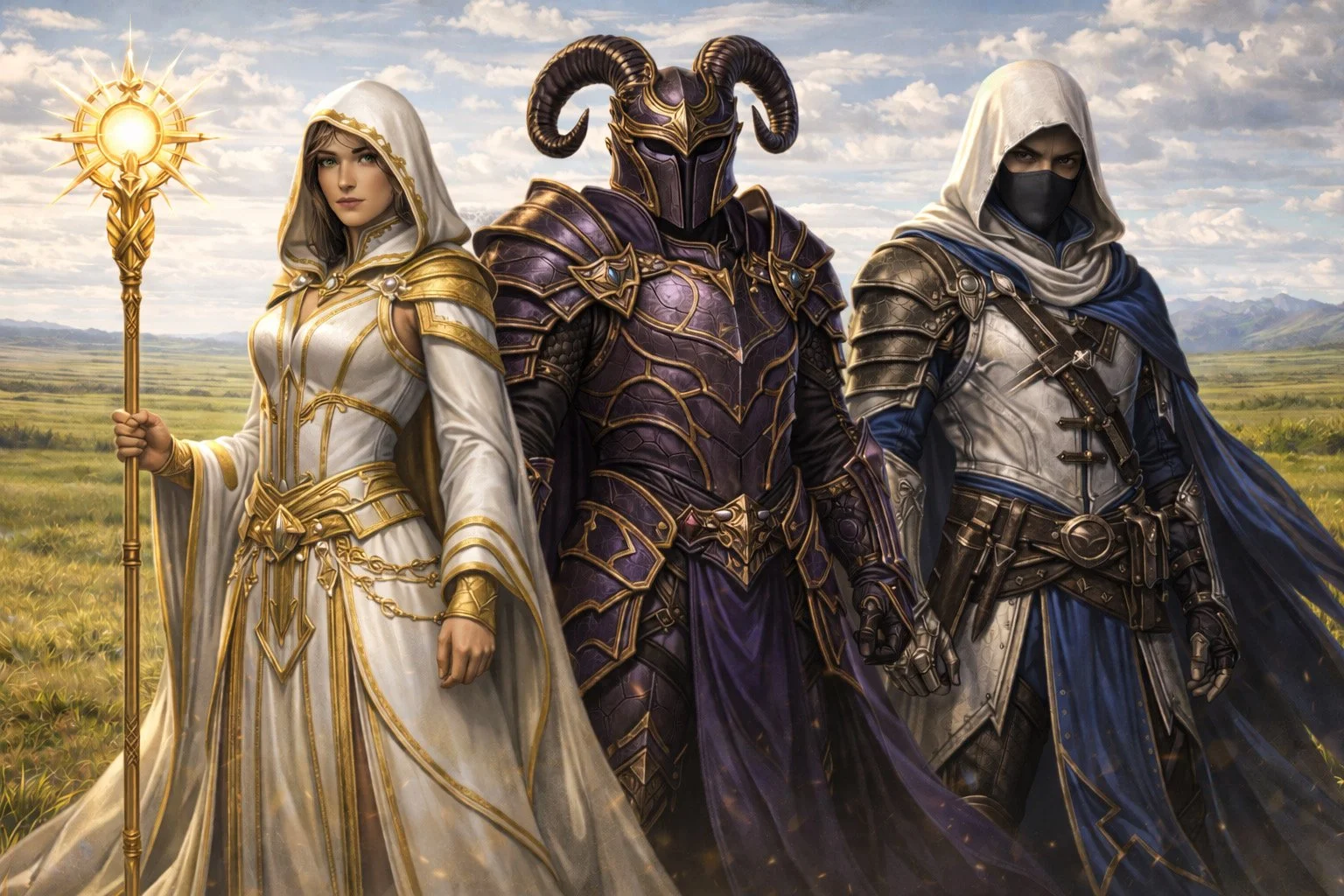
The Order of Saint Christine stands as one of the most disciplined and ideologically driven forces in the Realm of Zyltharn. Bound by divine doctrine rather than political ambition, the Order wages war not for territory, but for purification, judgment, and sacred balance.
Where other factions pursue dominance, the Saints pursue righteous correction.
Their armies move with unnerving unity, guided by unwavering faith and enhanced by powerful holy magic.
-
Divine Magic Superiority
The Order commands some of the most refined holy enchantments in Zyltharn. Their clerics and paladins wield restorative, protective, and destructive light-based abilities capable of countering curses, necromancy, and corruption. Holy magic within their ranks is not merely weaponized — it is doctrinal.
Unbreakable Morale
Saint soldiers are notoriously resistant to fear, intimidation, and psychological warfare. Faith functions as both armor and weapon. Retreat is rare. Surrender is nearly nonexistent.
Battlefield Endurance
Blessings, healing rites, and divine shields allow Saint forces to sustain prolonged engagements. What would cripple other armies often only slows them. They excel in attrition warfare.
Cavalry Dominance
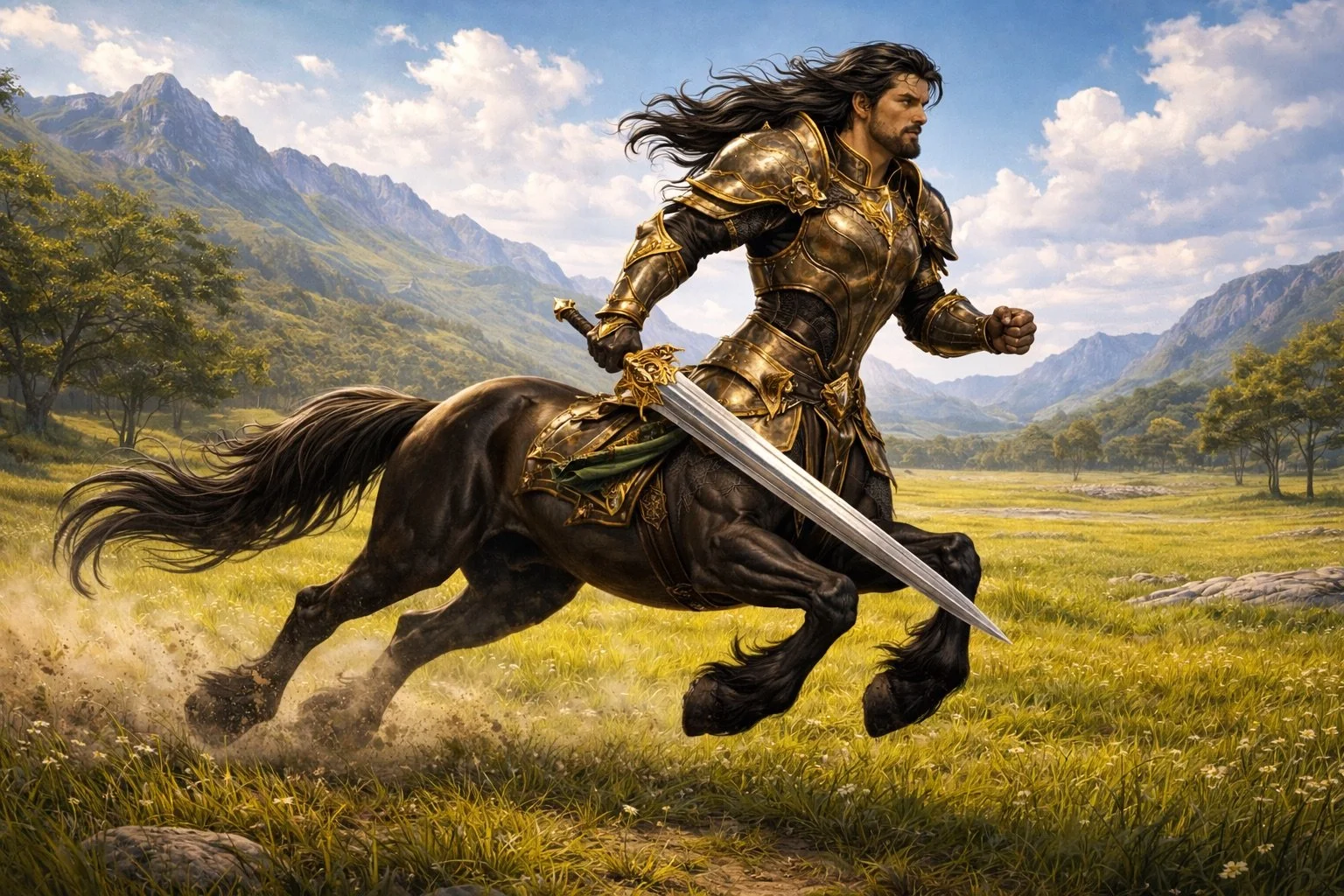
Their signature Centaur Riders grant exceptional mobility, charge force, and battlefield disruption. These units transform open-field conflicts into devastating momentum battles.
Lost Lords
-
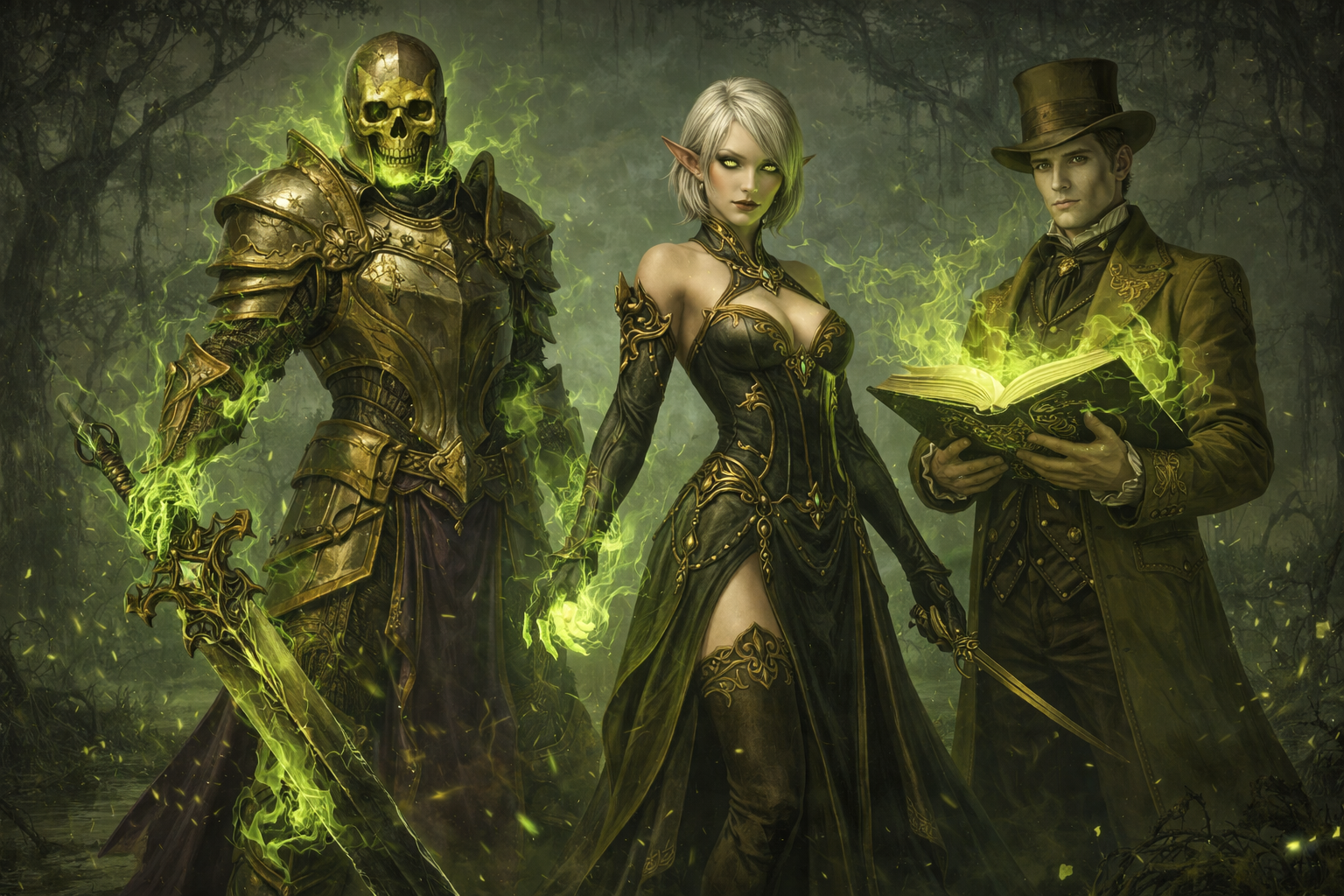
The Lost Lords are not merely a faction — they are a ruling class shaped by decay, ambition, and forbidden mastery over death itself. Comprised of necromancers, corrupted aristocracy, and ancient bloodlines, the Lost Lords view mortality as a flaw rather than a law.
Where others fear death, the Lost Lords command it.
Their territories often appear eerily still — not lifeless, but unnaturally preserved within an atmosphere of quiet dread.
-
Necromantic Supremacy
The Lost Lords wield unmatched expertise in necromancy, soul-binding, and corpse manipulation. Fallen enemies frequently become reinforcements, making prolonged conflict dangerously costly. Every battlefield is a potential resource.
Attrition Warfare Dominance
Unlike conventional armies, Lost Lord forces grow stronger during extended engagements. Casualties matter little when death itself feeds their ranks. They excel in wars of exhaustion.
Psychological Warfare
Few factions induce fear as effectively. Their presence alone destabilizes morale, as soldiers confront the terrifying reality of fighting fallen comrades. Terror is a weapon they deploy effortlessly.
Undead Resilience
Undead units ignore fatigue, fear, and conventional pain thresholds. This allows Lost Lord armies to maintain relentless pressure without degradation.
Corruption Zones
Lost Lord territories and battlefields often become saturated with death energy, weakening enemies while amplifying necromantic abilities.
College of Marisa
-
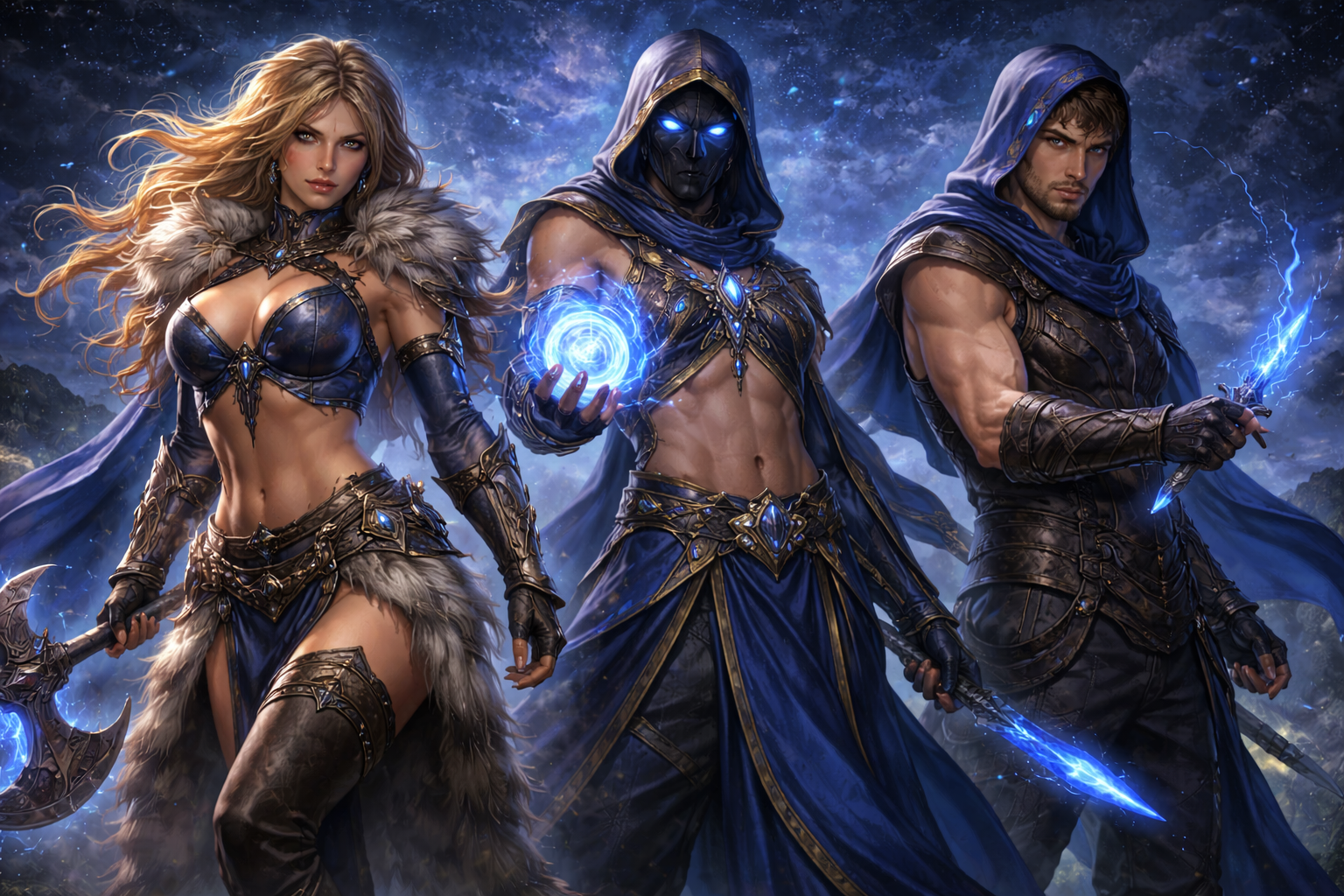
The College of Marisa represents the pinnacle of magical advancement within the Realm of Zyltharn. Composed of wizards, witches, scholars, and sorcerers, the College does not rely on brute force or territorial aggression — their dominance stems from knowledge, precision, and overwhelming arcane capability.
Where armies clash with steel, Marisa reshapes reality itself.
-
Arcane Superiority
The College commands the most advanced magical techniques in Zyltharn. Their spellcasters wield destructive, defensive, and reality-altering abilities capable of neutralizing entire armies. Magic is not support — it is their primary weapon.
Elemental Golem Armies
Rather than conventional soldiers, the College deploys magically animated constructs forged from fire, stone, ice, and storm energy.
Golems do not tire. They do not fear. They do not break.
Battlefield Control
Marisa forces specialize in environmental manipulation:
• Gravity distortion
• Elemental storms
• Arcane barriers
• Spatial disruption
They dictate how battles unfold.
Magical Infrastructure
College territories are fortified by immense defensive enchantments, making direct assaults extraordinarily costly.
Tactical Versatility
Few factions adapt as rapidly. Spellcasters can shift combat strategies instantly based on enemy composition.
Mount Pryzar
-
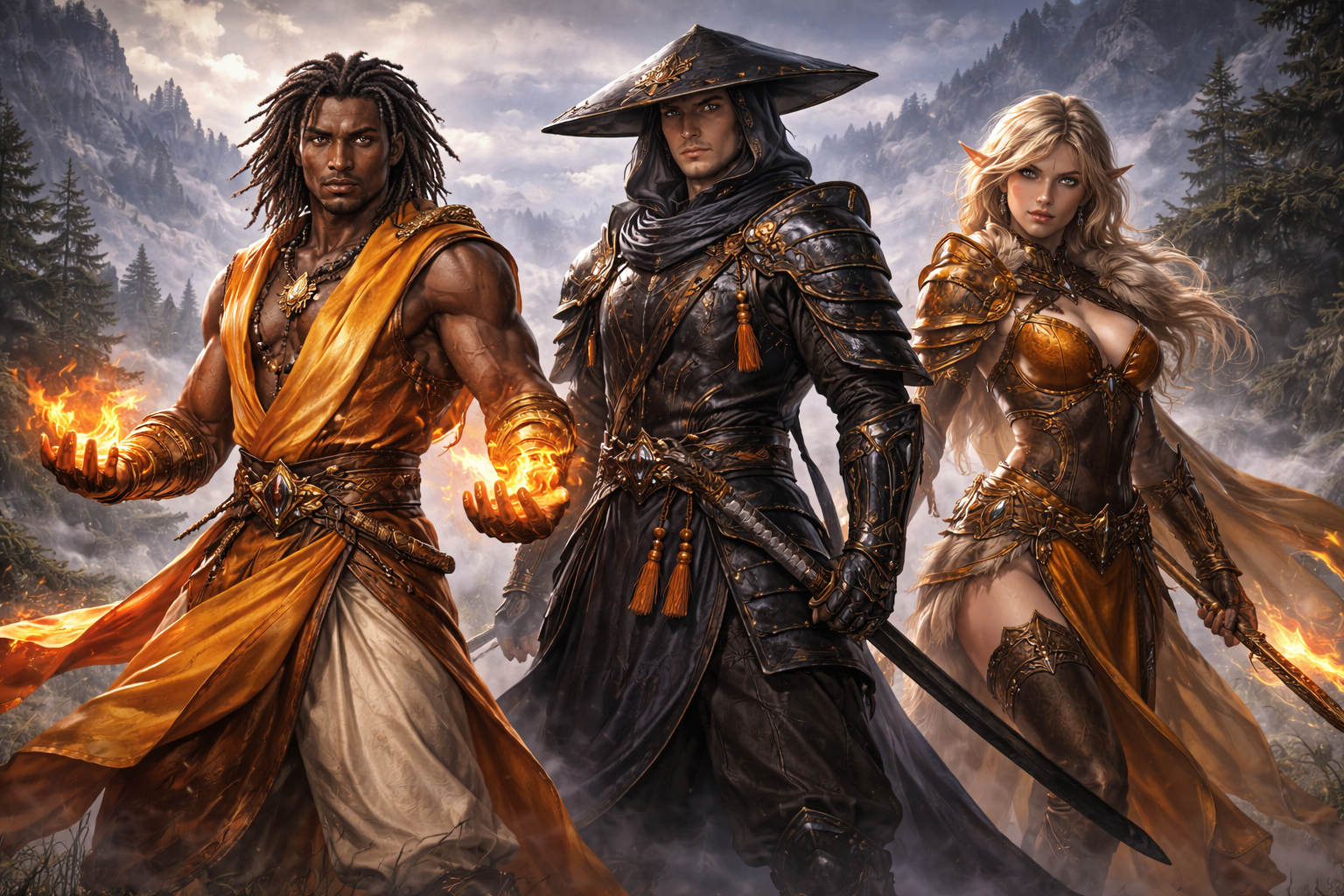
Mount Pryzar is a faction defined by discipline, mastery, and ancient martial tradition. Comprised of monks, ninjas, samurai, and clan warriors aligned with the Zodiac Orders, Pryzar fighters pursue perfection of body, mind, and combat technique.
Where other factions rely on armies, Pryzar relies on precision and supremacy of skill.
Their warriors are trained not merely for battle — but for absolute efficiency.
Dragons, revered as symbols of transcendence and destructive balance, serve as both weapons and sacred companions.
-
Elite Combat Mastery
Pryzar warriors are among the most individually lethal fighters in Zyltharn. Their training emphasizes speed, precision, and devastating technique. A single Pryzar combatant can rival entire squads.
Extreme Mobility
Mount Pryzar forces excel in movement-based warfare:
High-speed strikes
Vertical traversal
Rapid repositioning
Hit-and-vanish engagements They control the flow of combat through agility.
Dragon Techniques
Many Pryzar warriors wield Dragon Disciplines — powerful martial abilities that manifest as energy projections, devastating strikes, or elemental bursts.
Unmatched Discipline
Pryzar soldiers exhibit extraordinary composure, coordination, and tactical execution. Chaos rarely affects them.
Nightingales
-
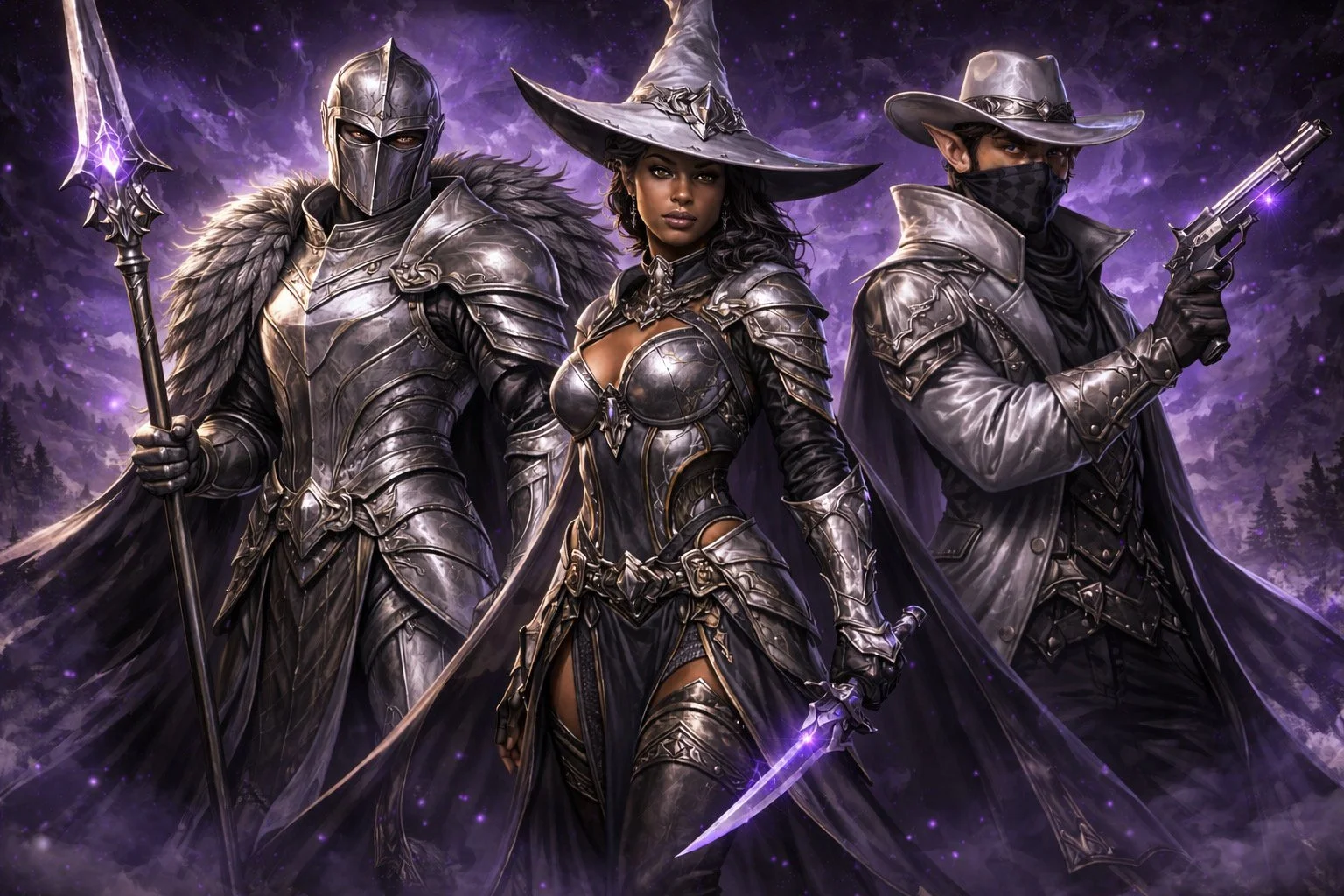
The Nightingales are not a conventional military force — they are an omnipresent shadow network operating across the Realm of Zyltharn. Masters of infiltration, assassination, espionage, and psychological destabilization, the Nightingales thrive in chaos, secrecy, and fear.
Where armies march openly, the Nightingales strike unseen.
Their influence rarely manifests through territorial banners or marching legions. Instead, it emerges through sudden disappearances, silent executions, collapsing alliances, and wars that ignite without warning.
-
Unmatched Stealth Operations
Nightingale operatives excel in invisibility, infiltration, and silent elimination. Their forces specialize in bypassing defenses rather than confronting them. Battles often end before they begin.
Precision Assassination
Commanders, champions, mages, nobles — Nightingales prioritize high-value targets. Removing leadership destabilizes entire armies.
Psychological Warfare Mastery
Fear, paranoia, mistrust — the Nightingales weaponize uncertainty itself. Enemies rarely know where the next strike will occur.
Extreme Tactical Flexibility
Unlike structured armies, Nightingale cells adapt instantly:
Ambush tactics
Sabotage operations
Guerrilla warfare
Counter-intelligence
Low Visibility / High Impact
Small units produce disproportionately devastating outcomes.
Information Superiority
Espionage networks grant the Nightingales exceptional battlefield and political awareness.
Guild Of Animals
-
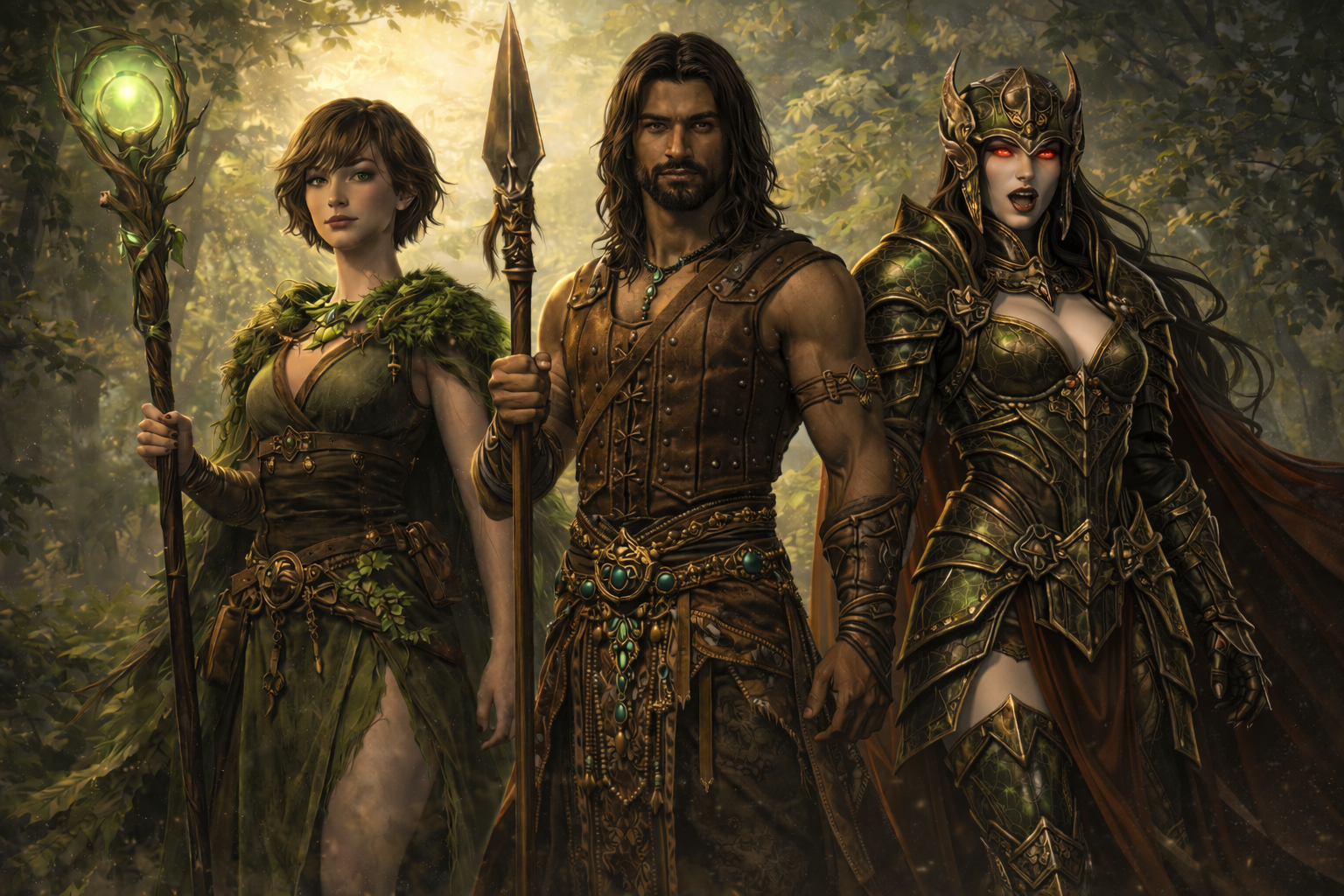
The Guild of Animals represents the untamed authority of nature within the Realm of Zyltharn. Comprised of druids, rangers, beast masters, and primal warriors, the Guild does not seek conquest through politics or empire — they assert dominance through environmental control and symbiotic warfare.
Where civilizations reshape the world, the Guild reclaims it.
Their territories pulse with life, danger, and relentless natural force. Forests move. Beasts obey. The battlefield itself becomes their ally.
To fight the Guild is to fight nature’s wrath.
-
Environmental Supremacy
Guild forces dominate terrain-based warfare. Forests, plains, jungles, and wildlands amplify their abilities. The land itself becomes a weapon.
Beast Command Mastery
The Guild deploys coordinated animal forces:
Apex predators
Swarm creatures
Massive war beasts
Aerial hunters
Their armies are living ecosystems.
Adaptive Combat Style
Unlike rigid military factions, Guild fighters adapt fluidly:
Ambush tactics
Pack coordination
Guerilla warfare
Predator-style engagements
Natural Regeneration & Endurance
Many Guild members possess enhanced vitality, healing factors, or resilience derived from primal enchantments.
Overwhelming Battlefield Chaos
Enemy formations often collapse under unpredictable multi-directional assaults from beasts and fighters alike.
Ebony Empire
-
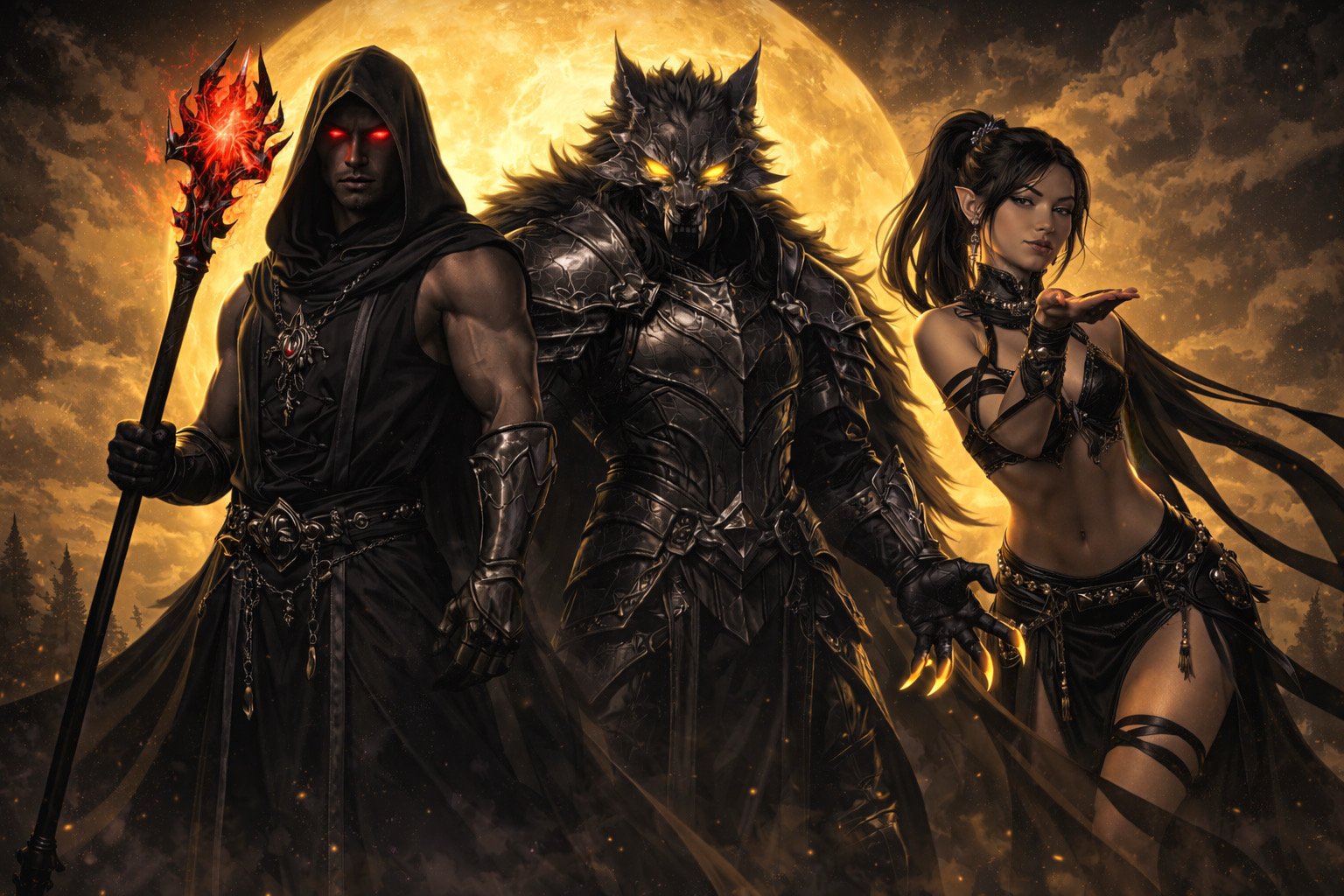
The Ebony Empire stands as one of the most formidable superpowers in the Realm of Zyltharn. Ruled by ancient bloodlines and sustained by vampiric and werewolf elites, the Empire does not simply conquer territory — it establishes order through fear, dominance, and calculated superiority.
-
Enhanced Physiology (Vampire & Werewolf Forces)
Imperial soldiers often possess supernatural traits:
• Heightened strength
• Accelerated regeneration
• Night-vision superiority
• Enhanced reflexes
This grants them a natural advantage in close combat and night warfare.
Hierarchical Discipline
Unlike chaotic factions, the Ebony Empire operates under a strict chain of command. Orders are followed without hesitation.
Efficiency is doctrine.
Night Dominance
The Empire is most lethal under darkness. Night operations, ambushes, and coordinated assaults under moonlight are signature tactics.
Elite Troops
Werewolf shock units excel at breaking formations and creating panic. Vampiric officers specialize in precision dueling and tactical command.
Strategic Intelligence & Political Control
The Empire maintains strong governance structures, supply chains, and internal enforcement systems. They are not merely warriors — they are rulers.
Controlled Brutality
Unlike mindless destruction, the Empire applies violence strategically. Punishments are public. Resistance is made an example.
Kizar Army
-
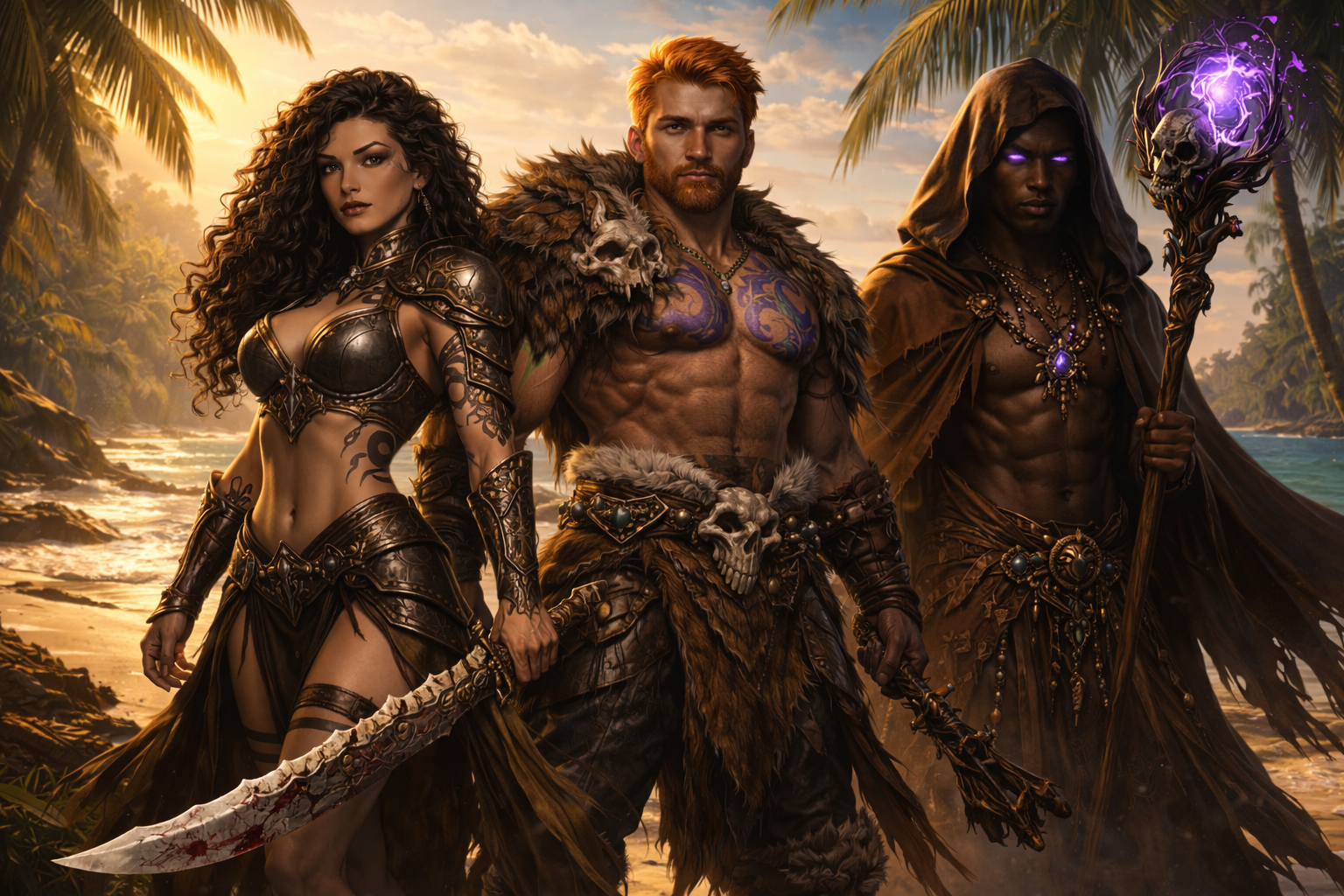
The Kizar Army is a relentless war faction forged through conquest, survival, and dominance of the seas. Composed of barbarians, Vikings, Amazons, and Outlanders, Kizar does not negotiate power — it takes it.
They believe in one truth: Strength determines order!
-
Brutal Frontline Superiority
Kizar fighters excel in raw physical combat. Their warriors are conditioned for endurance, ferocity, and shock impact.
They overwhelm through force including magic.
Naval Dominance
Kizar fleets control sea lanes and coastal territories. Amphibious assaults and surprise coastal raids are signature tactics.
They strike where enemies feel safest.
Warrior Culture
Battle is not a duty — it is identity. Morale remains high even under extreme pressure.
Retreat is dishonor.
Savage Momentum Tactics
Kizar specializes in aggressive advances:
• Shield-breaking charges
• Berserker surges
• Rapid warband flanking
• Shock-and-crush engagements
Amazon & Outlander Precision Units
While barbarians bring brute force, Amazons and Outlanders bring agility, tactical coordination, and ranged combat expertise.
This balance makes Kizar more dangerous than outsiders expect.
Harsh Environment Adaptation
Kizar warriors thrive in deserts, coastal storms, and rugged terrain.

Freedom Fighters
-
Operating from hidden camps, floating sky platforms, and constantly shifting strongholds, the Freedom Fighters rely on speed, disruption, and unpredictability rather than territorial control.
They survive through adaptation.
-
Guerrilla Warfare Mastery
Freedom Fighter units excel in:
• Supply line sabotage
• Hit-and-run attacks
• Night raids
• Ambush operations
• Tactical withdrawals
They do not fight fair — they fight smart.
Sky Rider Superiority
Their signature aerial units grant rapid mobility across terrain.
Sky Riders allow:
• Swift reinforcement
• Sudden assault drops
• Aerial scouting
• Strategic escape routes
They are extremely difficult to pin down.
High Adaptability
Because they recruit from multiple factions, Freedom Fighters combine diverse combat styles and tactics.
Unpredictability is their weapon.
Morale Through Cause
Unlike armies bound by command, Freedom Fighters are driven by belief. Many have lost everything.
Desperation fuels resilience.
Decentralized Structure
War camps operate independently, making large-scale collapse nearly impossible
Destroying one camp does not end the movement.
Bandits & crime SynDicates
-
Not every threat in the Realm of Zyltharn flies a banner.
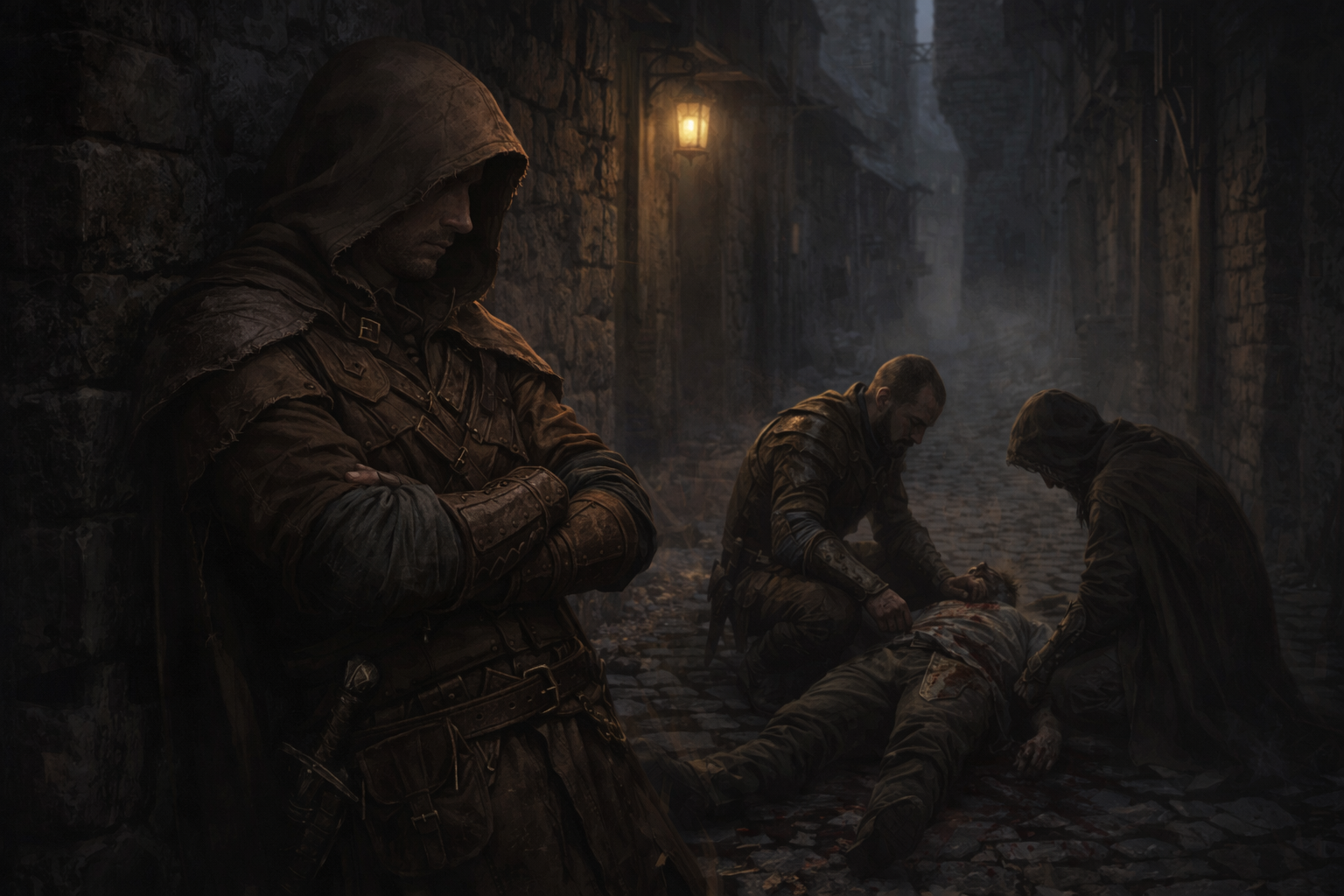
Bandits and Criminal Syndicates operate outside the grand wars of empires, saints, necromancers, and warlords. They thrive in borderlands, trade routes, abandoned ruins, and corrupted cities — feeding off instability created by larger powers.
Where kingdoms clash, criminals profit.
Some are desperate survivors.
Others are highly organized shadow enterprises controlling smuggling, slavery, assassinations, black markets, and underground tournaments/gambling.
-
Information Control
They trade secrets like currency and sell it to factions
Economic Influence
Black and slave markets given them financial leverage in the underworld.
Covert Enforcement Units
Factions and nobles usually hire their services for trained guards, mercenaries, enforcers, assassins, and rogue spellcasters in secret.
Operational Secrecy
Leadership is often hidden behind layers of intermediaries.
Ferals
-
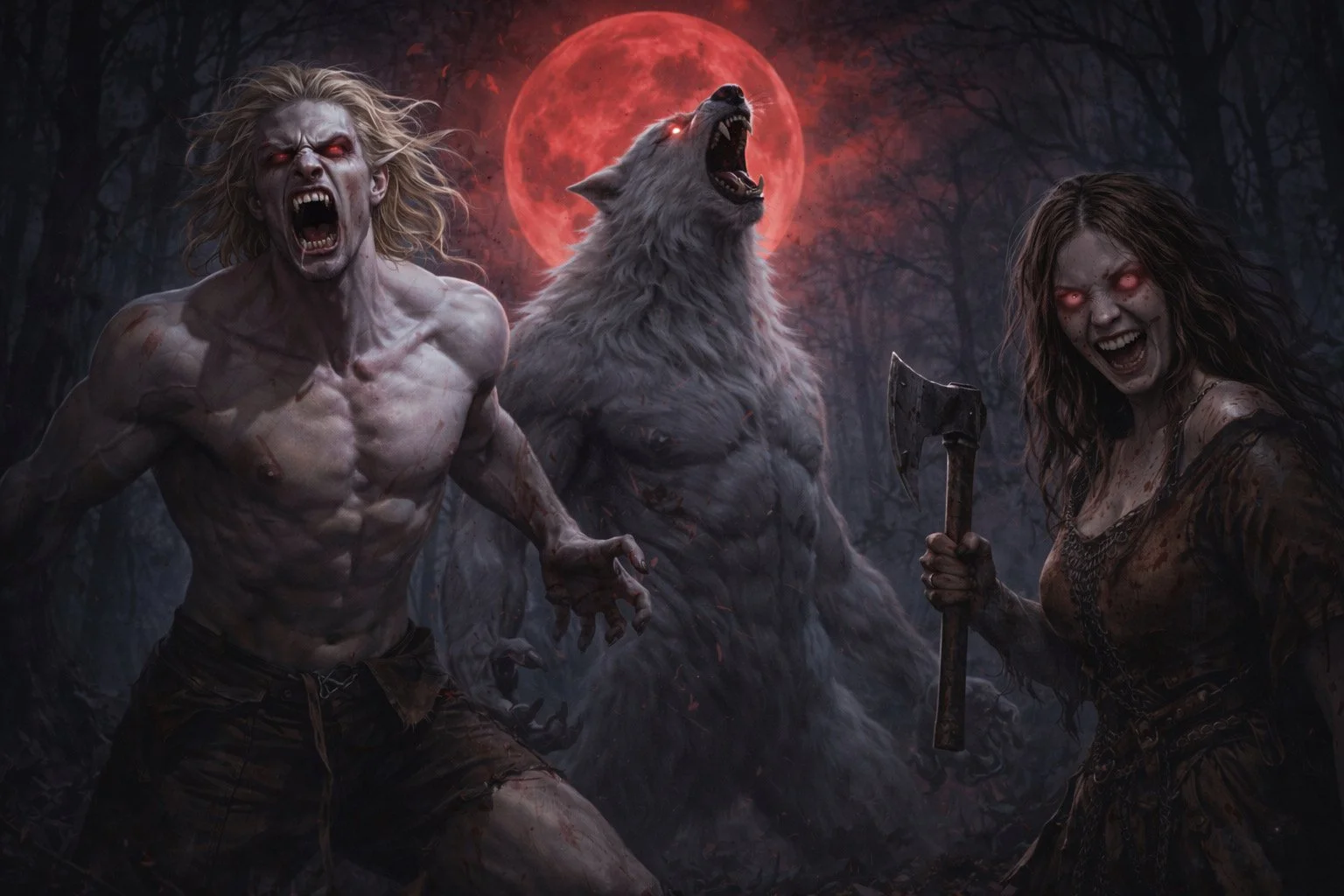
Ferals are beings who have lost control of their humanity.
They exist between instinct and madness.
Some were once soldiers.
Some were once nobles.
Some were once innocent.
Now they are creatures driven by hunger, rage, or unstable magical surges.
Ferals do not conquer territory.
They infest it.
-
Enhanced Physical Mutation
Most Ferals possess amplified strength, speed, or durability beyond normal warriors.
Common mutations include:
• Elongated claws
• Hyper-developed muscle structure
• Accelerated regeneration
• Heightened senses
• Partial bestial transformations
Unpredictable Combat Behavior
Ferals do not follow structured tactics. Their erratic aggression makes them difficult to anticipate.
Pain Resistance
Many Ferals exhibit diminished pain response, allowing them to continue fighting despite severe injuries.
Instability Surges
Ferals become enraged when in combat or near death.
Infection Risk (Rare Variants)
Certain strains spread corruption through blood exposure or curse transfer.
-
Only one dominant feral variant can fully corrupt a mortal host. The transformation depends entirely on bloodline, nature, and the source of infection:
Werewolf/Vampire Born Individuals
If a werewolf infected by a Vampire Feral, they do not become vampires.
If an individual is a hybrid of Vampire and werewolf only the dominant strain takes over..
They devolve into a Feral — mind broken, instincts uncontrollable.
Humans
If infected by a Vampire, they become a vampire.
If infected by a Werewolf, they become a werewolf.
If infected by another ordinary corrupted human (madness-born), their mind fractures. And they descend into pure madness, becoming unstable ferals without enhanced form.
Dragons
If infected by a feral corruption, dragons can become Feral Dragons.
These are catastrophic beings of rage and magical instability and have the need to feast and spread their infection.
Humans Infected by a Feral Dragon
In rare cases, they transform into a Feral Dragonkin.
More commonly, the draconic corruption overwhelms their mind, reducing them to a mad, broken human consumed by violent instability.
Feral corruption
Once scratched or bitten by a Feral, the curse does not follow a fixed timeline.
For some, the transformation is immediate — their body twisting within moments.
For others, it takes hours, as the corruption slowly spreads through blood and mind.
The outcome depends entirely on the individual’s will.
Cure
The curse is not always permanent.
If the infected seeks a Cleric quickly enough, the corruption can be purged through holy cleansing rites.
If they delay… the transformation becomes inevitable.
Once the feral state fully takes hold, ordinary healing magic will no longer work.
Returning From the Brink
There are rare cases of individuals returning from a feral state.
It requires extraordinary willpower — a mind strong enough to reclaim itself from instinct and madness.
Those who succeed return fully conscious and aware.
However, they are never the same. Their eyes remain red and faintly glowing — a permanent mark of the corruption they survived.
They walk the line between control and chaos however, they cannot spread the curse again.
Spirits
-
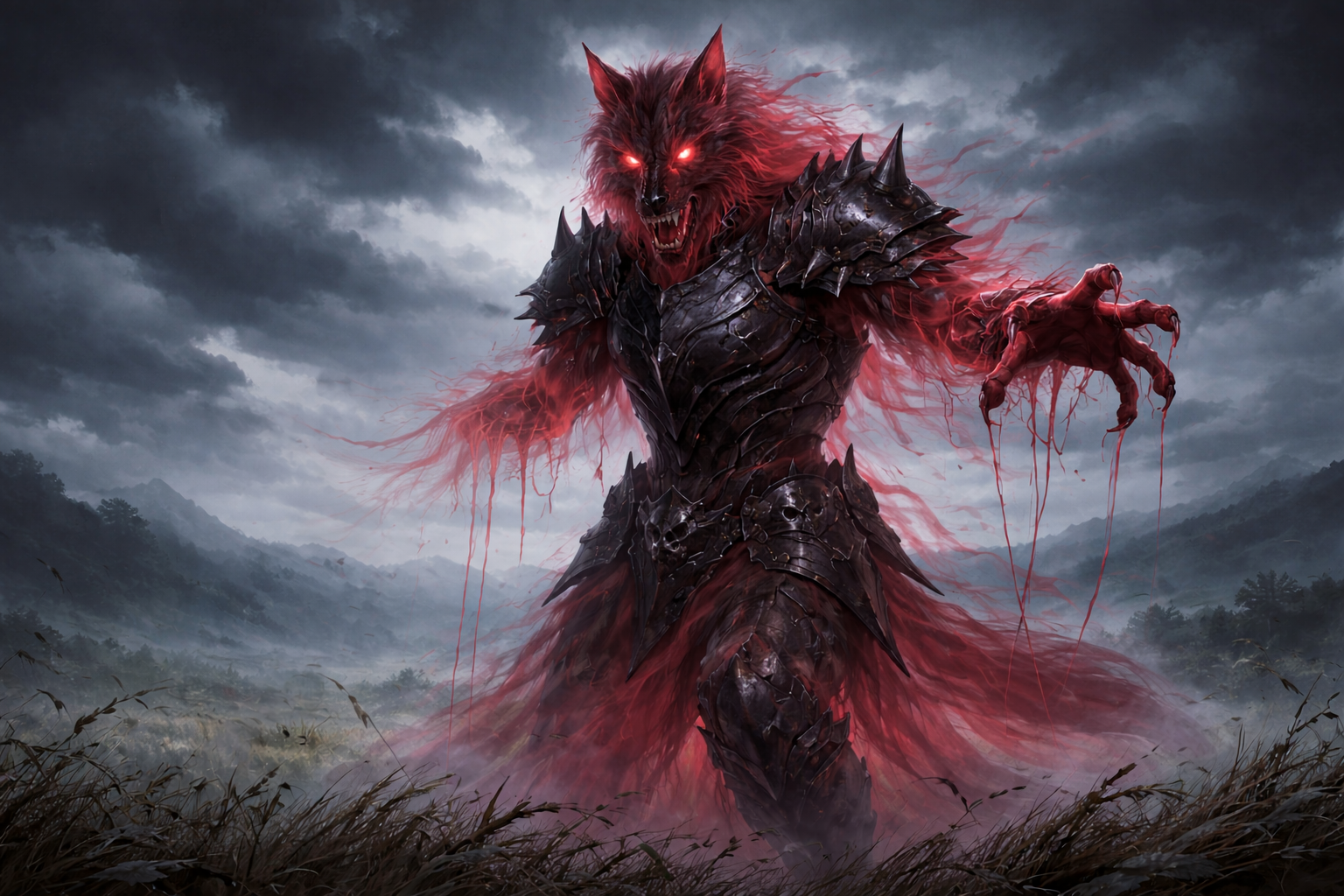
Spirits are beings untethered from physical form — remnants of the dead, fragments of memory, elemental consciousness, or manifestations of unresolved emotion.
Some are harmless.
Many are not.
Spirits emerge from:
• Battlefields soaked in death
• Cursed ruins
• Broken enchantments
• Failed necromantic rituals
• Emotional catastrophes
• Ancient sacred sites
They do not march.
They linger.
And when disturbed — they react.
-
Intangibility
Most Spirits cannot be harmed by conventional weapons. Steel passes through them unless enchanted.
Soul-Based Attacks
Spirits often target:
• Mental stability
• Emotional state
• Vital energy
• Spiritual essence
They attack what cannot be armored.
Fear Induction
Their presence alone can trigger panic, hallucinations, or despair.
Environmental Manipulation
Spirits frequently affect surroundings:
• Sudden temperature drops
• Flickering light sources
• Whispering distortions
• Sudden silence
Possession (Rare Variants)
Some Spirits can briefly inhabit living hosts.
Centaurs
-
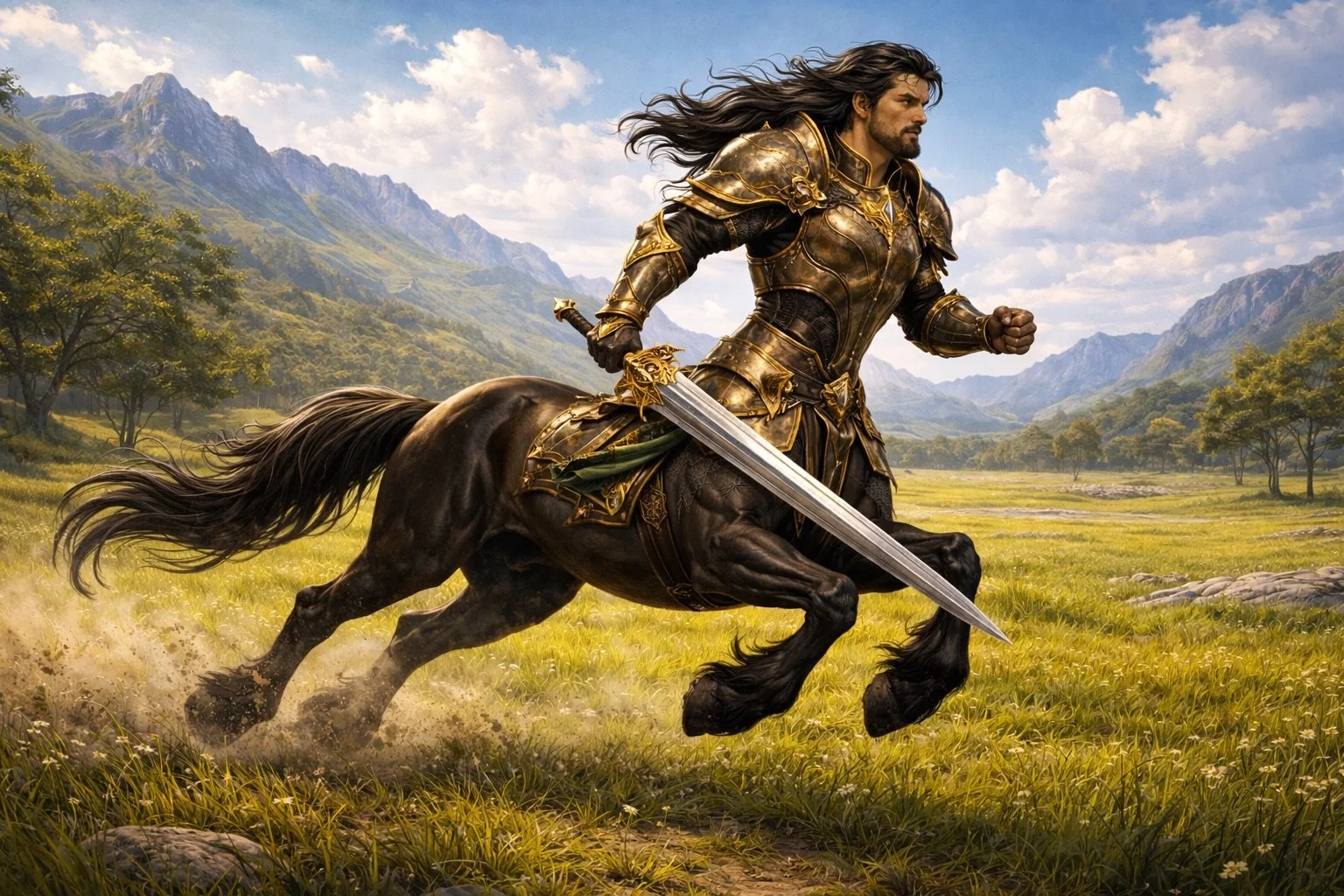
Centaurs are a proud and ancient hybrid steeds— half humanoid, half equine — forged for speed, endurance, and battlefield superiority. Across the open plains and vast grasslands of Zyltharn, they are unmatched in mobility warfare.
Some serve as Calvary in factions, however they do not act independently without a rider or a guide.
Others remain on the plains and grasslands in private sanctuaries unless invited.
They do not see themselves as beasts but as partners for their riders.
Centaurs cannot serve as a single active soldier in the war. An ancient pact with the gods forbids it — and if they break this sacred vow, they will be stripped of their form and turned into human permanently.
-
Unmatched Mobility
Centaurs dominate open-field combat. Their speed allows:
• Devastating cavalry charges
• Rapid flanking
• Hit-and-run assaults
• Tactical repositioning
No infantry force outruns them.
Charge Impact Supremacy
A coordinated Centaur charge can shatter shield walls and collapse frontline formations instantly.
Endurance & Stamina
Centaurs sustain long-distance travel and prolonged engagements without fatigue.
Mounted Archery & Spear Combat
Many Centaur warriors specialize in:
• High-speed archery
• Precision spear thrusts
• Lance-based shock assaults
They combine mobility with lethal accuracy.
Cannibals
-
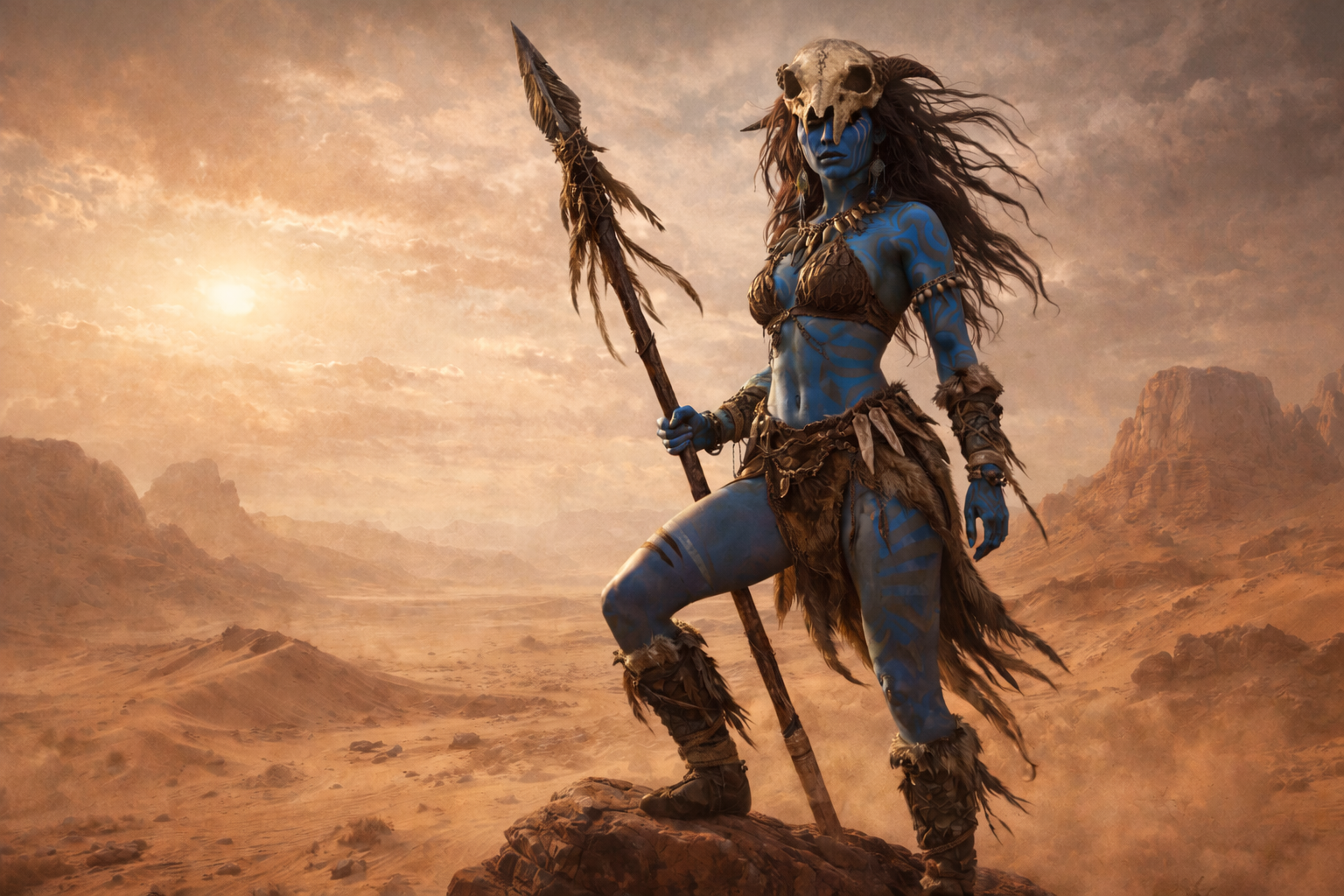
Cannibals in the Realm of Zyltharn are fractured remnants of humanity consumed by starvation, madness, or ritual corruption.
Some began as stranded tribes in famine-stricken lands.
Others descended into flesh-eating through forbidden rituals meant to steal strength from enemies.
Over time, many lost more than morality.
They lost themselves.
Cannibal clans dwell in:
• Ruined villages
• War-torn wastelands
• Deep forests
• Desert outskirts
• Abandoned fortresses
-
Savage Aggression
Cannibals fight with brutal ferocity, often ignoring pain and personal injury in pursuit of prey.
Pack Hunting Instinct
They operate in coordinated swarms, using numbers and ambush tactics to overwhelm isolated targets.
Psychological Terror
Few threats are more destabilizing to morale than enemies who consume the fallen.
Ritualistic Empowerment (Certain Tribes)
Some cannibal sects believe consuming specific victims grants:
• Increased strength
• Heightened endurance
• Temporary frenzy states
• Spiritual absorption of skills
Whether superstition or dark magic — the results can be dangerous.
Cults
-
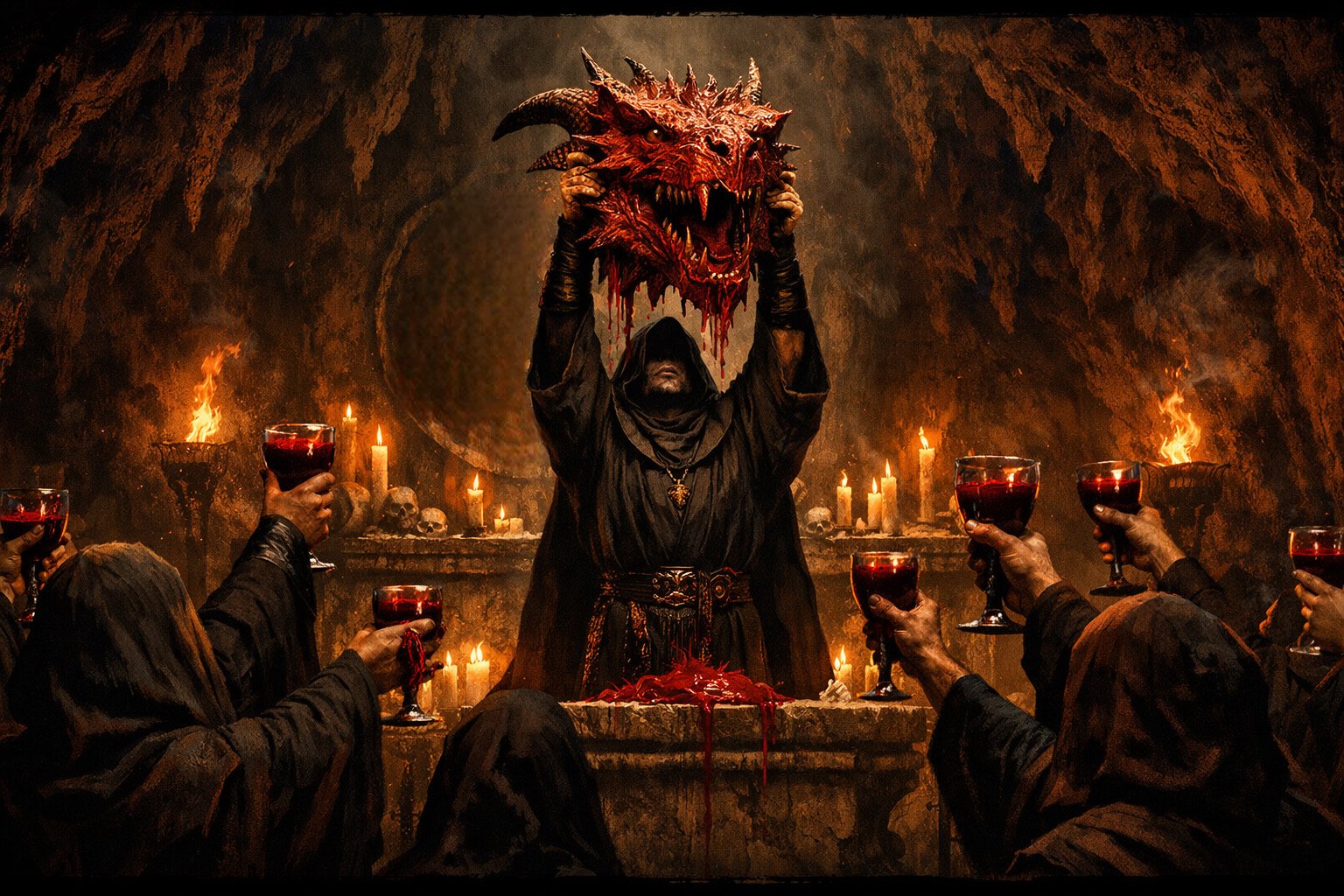
Across the Realm of Zyltharn, cults rise in the shadows of war, famine, magical catastrophe, and political collapse. They form around forbidden gods, ancient rites, corrupted relics, apocalyptic prophecies, or charismatic leaders who promise revelation.
-
Fanatical Devotion
Cultists do not fear death. Many welcome it.
This makes them resistant to intimidation, retreat pressure, and morale collapse.
Ritualistic Power
Unlike structured mages, cultists draw strength from collective rituals:
• Summoning ceremonies
• Blood rites
• Soul-binding
• Dark blessings
These rituals can dramatically amplify their threat level.
Hidden Infiltration
Cults often embed themselves within cities, factions, or noble houses.
They grow unnoticed — until activation.
Sacrificial Magic
Many cults are willing to sacrifice their own members to unleash devastating effects.
-
The Ones Who See (Cataclysmic Potential)
They claim the world is false.
The Ones Who See believe Zyltharn is a constructed lie — a cage designed by unseen forces. They whisper that fate is a chain wrapped around every soul, and the gods are wardens guarding a prison no one realizes they inhabit. They study forbidden prophecies, dissect divine scripture, and mutilate reality through experiments meant to fracture destiny itself. Usually known for their white owl masks and black outfits.
The True Lineage (Global Threat)
The True Lineage kneel only to Vorthalax, the Dragon God of Dominion. They believe dragons are divine incarnations, and humanity is livestock awaiting purification. Members bind themselves to dragons through ritual marriage, offering flesh, blood, and devotion in ceremonies that blur worship and consumption.
They often consume dragon flesh to “ascend and with dark rituals and become a dragon. ”
They sacrifice themselves to strengthen their dragons.
To them, mortals is weakness and only dragon deserves to rule.
Cult of the Drown (Civilizational)
The Cult of the Drown does not kill with blades. They whisper. Draped in pale blue masks and cold ceremonial robes, they follow Nerithys — the Siren Goddess of Sorrow and the Drowning Heart. They seek out the grieving, the isolated, the broken — and gently guide them toward oblivion.
They call despair sacred.
They call suicide an offering.
They call drowning a return to grace.
Cities touched by them do not burn.
They slowly sink
Cult of Nacromoss (Civilizational)
The Cult of Nacromoss worships the god of hunger .
To them, existence is consumption — and to devour is to evolve. Their purple-clad Devourers consume mortals in ritual feasts, believing each body absorbed grants strength, memory, and divine favor.
Over time, their bodies distort into animals
Their teeth sharpen.
Their eyes lose humanity eventually lose themselves completely.
Crimson Rose (Political)
The Crimson Rose spreads in elegance and silence. They believe vampirism is purity — a refinement of the flawed mortal state. Through forbidden rites, they forcibly drain and remake victims into “true blood” vampires, binding them to a lineage of crimson aristocracy.
They infiltrate noble courts.
They corrupt from within.
They bloom in secrecy.
Where the Rose takes root, humanity fades behind velvet curtains.
The Iron Wolves (Military Spread)
The Iron Wolves are a militant cult forged in iron and fanaticism. Clad in heavy iron armor and grey capes, they believe lycanthropy is not a curse — but divine selection reserved for the “chosen.”
Under secret lunar rites, they seize their victims and subject them to brutal transformation rituals. Bones are broken. Flesh is torn. Minds are shattered. Through torture masked as sacred ceremony, they forcibly reshape the body into a werewolf.
But the transformation is only the first step.
Through prolonged torment, psychological breaking, and ritual indoctrination, they strip away identity — turning the transformed into obedient, mindless soldiers.
The screams during these ceremonies are said to echo with both agony and prayer.
The Templars (Institutional Threat)
The Templars believe holiness is too fragile.
They mix divine magic with blood magic and feral blood, injecting corruption into their veins in the name of strength. They claim the Saints must evolve — that righteousness without power is failure.
They conduct “purification trials.”
They bleed to grow stronger.
They preach salvation through mutation.
To outsiders, they are heretics.
To themselves, they are the future of faith